

When Everything Feels Urgent and You've got an ADHD Brain (by, Rebecca De Ornelas)
Jul 09, 2026
This week's guest blog post is brought to you by, Rebecca De Ornelas, of Bold Words ADHD Coaching
(This post was written by a guest contributor as part of an ongoing series celebrating people doing business differently — folks who are queer, neurodivergent, people of color, relating to the land in ways that don't center extraction, building mutual aid networks, practicing gift economy principles, and generally refusing the idea that there's only one "right" way to work and live.
I'm so grateful to this writer for trusting me with their voice and expertise. If you love what you read, click through to their site linked below, and if you're doing work like this and want to write for this space too, submit here: https://forms.gle/
TL;DR:
- If you’ve got an ADHD brain (or you’re in chronic overload), suggestions from productivity gurus aren’t going to cut it.
- Drop the guilt and the perfectionism. You’re not required to do everything, and you definitely don’t have to do it all flawlessly.
- I’ve got some actually-useful questions to help you figure out what’s truly yours to care about, and what’s just other people’s baggage you’ve been guilt-tripped into carrying.
- You’re allowed to stop doing tasks that aren’t really yours, even if people get annoyed or judge you for it.
- Progress is messy by nature. Doing what you can right now is enough.
This one’s for the ADHD brains, but if you’re drowning in invisible labor, stuck in chronic overload, or just plain tired of systems that suck the life out of you, pull up a chair. You’re in the right place.
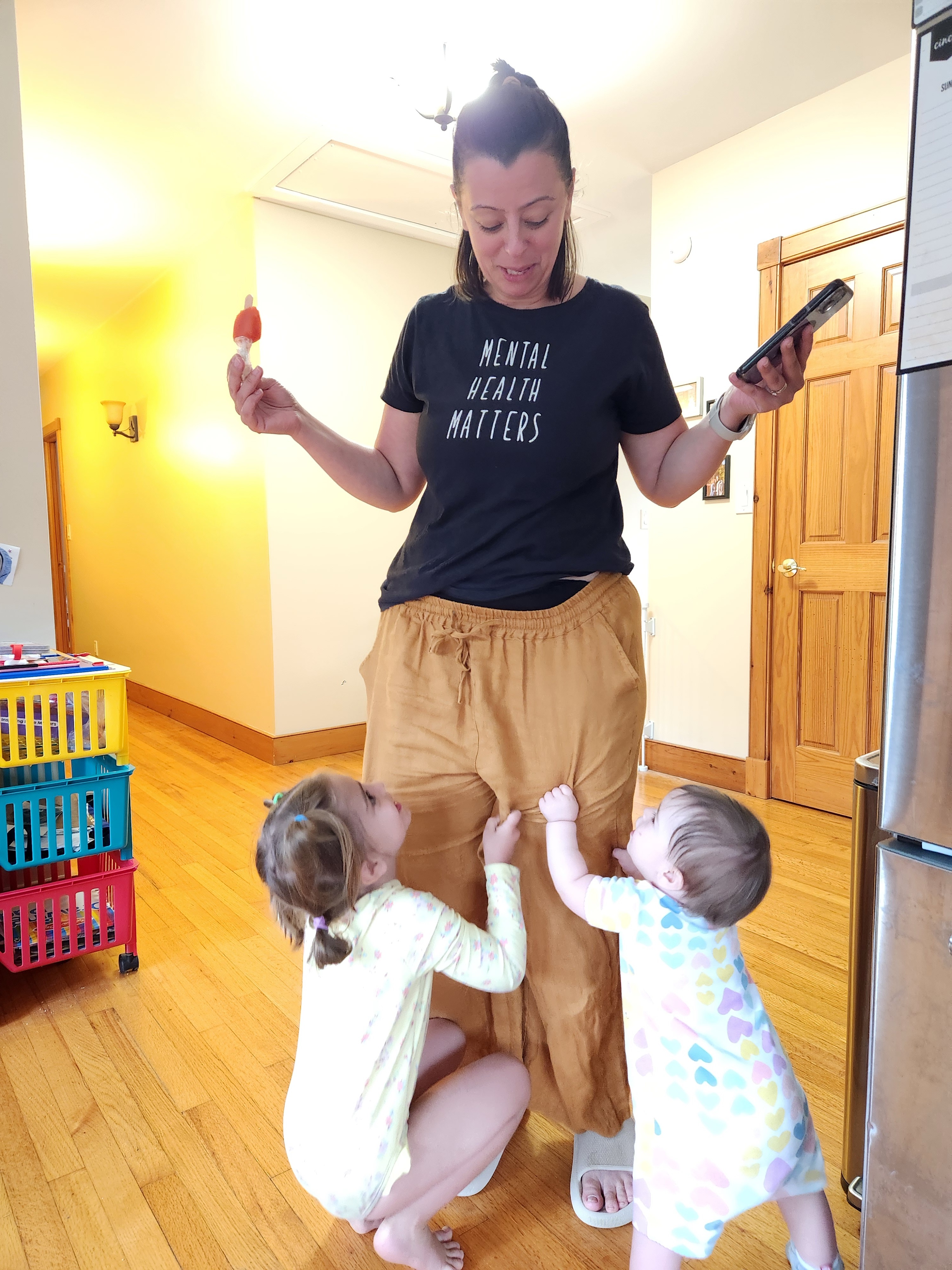
When Everything Feels Urgent
Productivity culture just keeps churning out shiny new to-do apps, each one promising to fix your 'too many things, too little time' problem. For $9.99 and a handful of ads for games you’ll never play, you can learn to master 'urgent' and 'important,' hit peak efficiency, and win the grand prize: even more time to be productive. Because apparently, that’s the goal.
If you have ADHD like me, you’ve probably tried every tool and planner out there, digital and physical, real and mythical. But after spending plenty of money, I can confidently tell you that none of them solves the real issue.
The real issue is prioritization, which isn’t exactly an ADHD superpower. Because dopamine runs lower and more unevenly in the brain circuits that handle planning and follow‑through, especially in the frontal lobes where executive function lives, “this is important but not urgent” doesn’t give us much to work with. When faced with a to‑do list, we usually pick whatever is most interesting, most irritating, or the thing that feels like it will blow up if we ignore it.
If that fear is justified, go ahead and prioritize that.
And then there’s the famous urgency/importance grid. Thanks for nothing, Eisenhower. That matrix assumes you can remember every single to-do (ha), pretend you have zero feelings about any of them (good luck), and rank them on some imaginary scale that ignores things like money, time, and who actually has resources. Meanwhile, tech bro Joe is out here bragging about launching a product solo—sure, Joe—while you’re stuck in a loop, not sure what to do first, and the goalposts keep moving.
Fun times.
I’d also be remiss if I didn’t address the very nature of the to-do list.

Where do I even start? Some things on your list actually matter to you—caring for your people, doing work you love, or projects that light you up. But look closer, and you’ll spot a bunch of tasks that landed there because no one else will do them, or because you’re boxed in by disability, money, or just plain lack of support. Capitalism, patriarchy, ableism—they all pile invisible work onto your plate. If you’re a woman, a caregiver, disabled (yes, ADHD counts), or all of the above, you’ve probably been trained since forever to keep everything running for everyone else. Add ADHD, and now you’re juggling everyone’s logistics and feelings: yours, theirs, even the family pet’s. All with the same brain that’s already working overtime compared to tech bro Joe.
How is your brain supposed to tell the difference between what actually matters and what just keeps everyone else comfortable? It can’t. All it sees is possible fallout: who might get mad, who might get hurt, what could mess with your housing, paycheck, or sense of belonging if you let something slide. Eventually, it all stacks up and everything feels equally urgent, so you freeze. Under that kind of stress, the part of your brain that’s supposed to plan (frontal lobes) gets quieter, and the part that scans for danger (oh hi, amygdala) gets louder, so of course you stall out.
To everyone else, your indecision and inability to get started look like you don’t have your act together. But inside? You just feel like crap.
But here’s the good news: you can learn to prioritize and move toward what you actually want, or at least get a rough map for the journey.
Next time you sit down to write your to-do list and don’t know where to start, ask yourself these questions:
Question 1: What on this list would I still do if no one else were watching?

Start by dumping every random thought and task out of your head—on paper, in your Notes app, or, my personal favorite, a rambling voice note that’s basically free therapy. Then go back and circle anything you’d still do if no one were watching (bonus points if you dance while doing it). That’s your “I actually care about this” pile. Sometimes this includes less glamorous stuff, like keeping your housing secure or feeding your kids. But I’m going to assume keeping everyone alive counts as something you care about.
You might also notice how many tasks are just there to keep other people happy or to keep up with some imaginary standard. Even just noticing this can change how you spend your precious time.
If the choice is between doing what genuinely matters to you—what actually lines up with your values—and doing what everyone else says you should care about, the decision gets a whole lot easier.
Question 2: For the big tasks, what’s the smallest version that still counts as progress?

ADHD and perfectionism make small tasks feel like huge projects. ‘Reply to email’ turns into ‘clear inbox,’ ‘look at finances’ turns into ‘build a 3-year plan or spreadsheet,’ and so on. Your brain sees the whole mountain, not just the first step. No wonder it wants to nap.
Pick one thing from your ‘I care about this’ or ‘keeps life running’ list and ask: what’s the tiniest, good-enough step I can do today?
Examples include answering one email from a real person (skip the newsletters, except this one), submitting basic info in health paperwork (they’ll ask you for the details all over again at your appointment anyway), or serving anything with protein for dinner (PB&Js totally count).
Finishing a small, doable task gives your brain a quick dopamine boost. You get that “I can do hard things” feeling, and your brain is slightly more willing to tackle the next step than it was five minutes ago.
Forget the advice about starting with the hardest thing. My way works better.
Question 3: For each task, ask: Who decided this is mine to do?

Look at your list for tasks that feel weirdly heavy if they don’t happen, like finding themed birthday favors, posting a meme in Slack, or texting your in-laws.
Ask yourself: Who gave me this job?
If you can trace it to a real conversation or agreement, decide if it still makes sense. If not, chances are it’s a role handed to you by family, workplace culture, gender norms, racism, or ableism, not your actual choice.
You don’t have to make drastic changes unless you want to. Maybe do the job less often, or at 60%. Ask someone to help, or leave it undone once and see if the world ends. Spoiler: it won’t.
People might push back or wonder why you’re doing less. You can say, “none of your business,” or, if you’re nicer than I am, “I’m trying out new ways to manage my energy.” Protecting your time and energy is more than fair.
I’m not saying you should ditch every hard task, tempting as that is. I’m just saying you can give yourself a break on stuff that might not even be yours to carry. Do these things actually matter? More importantly, do they matter to you?
You won’t realize how heavy your “bag of rocks” is until you start taking a few out and your body breaks out of emergency mode. When there are fewer “must‑do‑or‑else” tasks on your plate, your stress system can quiet down a bit, and your prefrontal cortex (the part that handles planning and perspective) has a fighting chance to come back online. ADHD brains already have a harder time keeping that prefrontal system in check when stress is high, so even the smallest relief in pressure can make a big difference in what feels possible.
If you’re still reading, you might be thinking, ‘Great, another system I’ll forget by next week.’ Fair. But you don’t have to get it right every time. Just keep coming back to what matters, even if you drop it (and you will). Every time you restart, you’re nudging your brain to run a slightly different route instead of the freeze or flee ones. Do that often enough and those routes get easier to access, because your brain literally strengthens the connections you use the most — what fires together wires together and all that good stuff.
Chances are, no one ever taught you how to prioritize what matters most. So, be patient with yourself.
And there you have it: your first priority.

Rebecca De Ornelas is a certified ADHD coach and ADHDer, living and loving in a neuro-complex family. She helps adults who are done working 10x harder just to keep up and are ready to focus their ADHD strengths on what matters most to them. Book a free discovery call at boldistheword.com.
We hate SPAM. We will never sell your information, for any reason.
